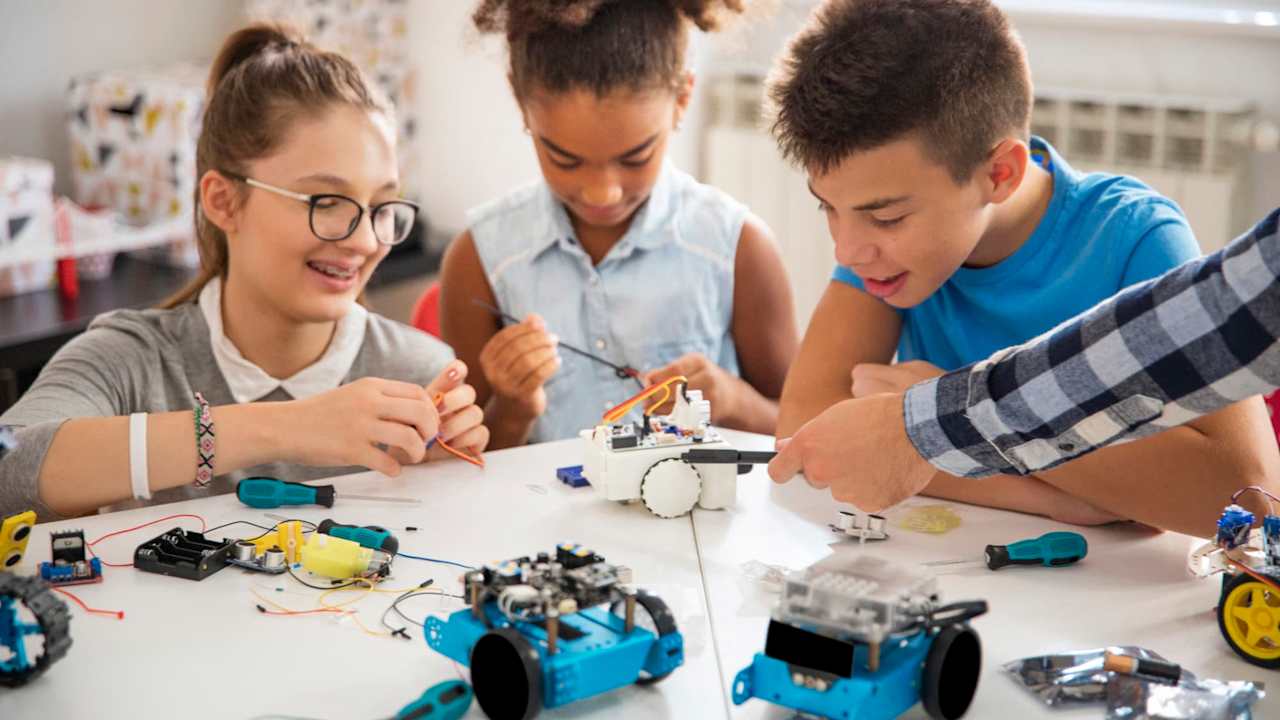
STEM — which stands for science, technology, engineering, and math — is a crucial piece of the educational experience. Biologist Judith Ramaley coined the acronym in 2001 for the U.S. National Science Foundation (NSF) as the organization began ramping up programs to promote STEM subjects in American schools.
As the country rolled into the 21st century, student STEM achievements in the U.S. lagged behind those in other countries. Naturally, the NSF sought solutions for improving STEM programs in schools. After a 2005 report noted a strong connection between economic privilege and STEM achievement, the NSF and other organizations began working to close this gap and make STEM resources more widely available.
A strong STEM foundation opens doors to a variety of educational options and lucrative, fulfilling career opportunities.
Parents may struggle to provide home-based learning in STEM for kids. This page presents top online resources in each STEM subject, plus a list of 150 courses, websites, activities, and competitions arranged by grade level.
Top Online Programs
Explore programs of your interests with the high-quality standards and flexibility you need to take your career to the next level.
Science in STEM
Science includes topics like biology, astronomy, physics, geology, and chemistry. Students who pursue science-related careers might become agriculturists, biological technicians, meteorologists, zoologists, or medical professionals. The BLS projects increased demand for life, physical, and social science occupations, expecting a 7% growth from 2018 to 2028.
Students can follow fun scientist role models on social media or through other avenues. For example, Adam Savage of Mythbusters maintains an active and informative Twitter account, as does astronaut Christina H. Koch. Bill Nye the Science Guy has even recently joined TikTok.
Kids don't need to stay tethered to textbooks when it comes to studying science. With hands-on activities available for every age group, learners can study topics like simple machines, chemical reactions, and the scientific method. Popular field trips could include planetariums, natural history museums, or even local state parks.
Top STEM Online Resources for Science
Technology in STEM
Technology refers to hands-on science applied to daily life. Technology can cross definitions with other categories, like engineering, but people generally use the term to describe computer-related jobs. Software engineers design and develop new programs and systems for computers, while computer programmers code software that the software engineers plan. Kids may also be interested to learn that video game designers are also a type of computer scientist.
The BLS projects that occupations for computer and information technology professionals will grow by 12% from 2018 to 2028 — much faster than the national average growth rate for all occupations. Technology jobs also garner lucrative salaries; computer and information research scientists, for example, earned a median annual wage of $122,840 in 2019.
These days, kids as young as pre-K can dive into coding and computer science basics.
Top STEM Online Resources for Technology
Engineering in STEM
Like technology, engineering uses scientific principles to solve real-life problems. Typically specializing in particular scientific disciplines like physics, chemistry, or biology, engineers plan and design items that kids encounter every day, like bridges and roads, medical equipment, and electrical systems. Exciting career possibilities for engineers include areas like aerospace, biomedical, civil, and environmental engineering.
According to the BLS, total engineering occupations should grow at the same rate as the national average from 2018 to 2028, increasing about 4%. Engineering jobs are often rewarding, and they help society move forward.
Kids use their innate creativity to engineer new projects all the time. By engaging them in DIY engineering projects, such as simple machines, parents can encourage that tendency or combat reluctance by introducing an element of fun. Engineers often claim a strong background in other STEM areas, particularly technology and math. A well-rounded focus on STEM for kids can foster interest in a wide variety of career arenas.
Top STEM Online Resources for Engineering
Math in STEM
Students learn math from the minute they start counting and continue developing their skills all the way through high school. Younger kids begin with addition, subtraction, and fractions, while advanced subjects include geometry, calculus, and probability.
A solid foundation in math prepares students for a variety of job opportunities. A crucial component of many other STEM occupations, math factors into computer-related jobs like data science, science occupations like astronomy, and engineering jobs like aerospace and environmental engineering. Math enthusiasts may also work in highly sought-after positions as actuaries, statisticians, and operations research analysts.
Math can apply to fascinating topics that kids encounter every day.
For extra out-of-classroom fun, kids can apply math principles to their favorite sports by graphing teams' performances, or tour local landmarks to better understand how architects use math.
Top STEM Online Resources for Math
STEM for Kids: Activities, Classes, Channels, and Websites
STEM for Grade School Kids
STEM for Middle School Kids
STEM for High Schoolers
STEM for All Ages
Continuing Your Kids' STEM Education
By using these and other fun STEM for kids resources at home, parents can encourage their children to follow their curiosity and make learning fun. Kids with a fascination for astronomy can engage directly with NASA TV and activities, while those who love video games can practice coding their own.
Students who struggle in subject areas like math may find those subjects more fun if they can learn them through games and interactive activities.


